Women in Business: Building, Leading and Making Room for Others
Helen Lami, Rachel Hickson, Helen Azer and Dr Ysanne Marville on leadership, calling and the next generation
What does it look like for women in business to lead with confidence without feeling they have something to prove?
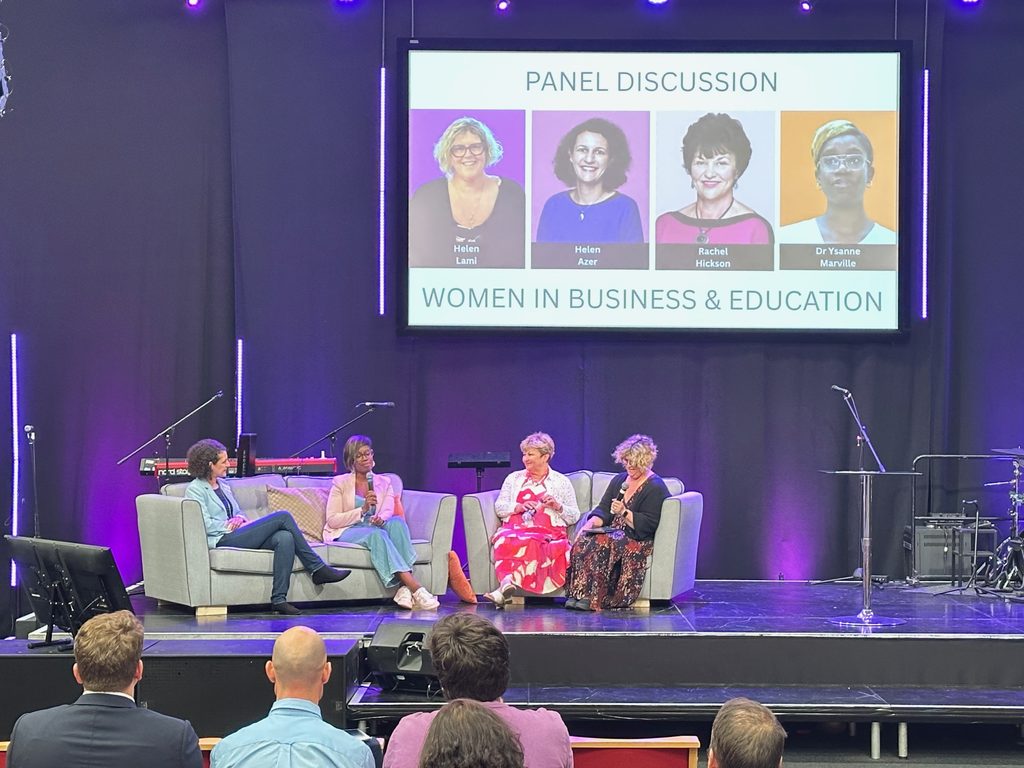
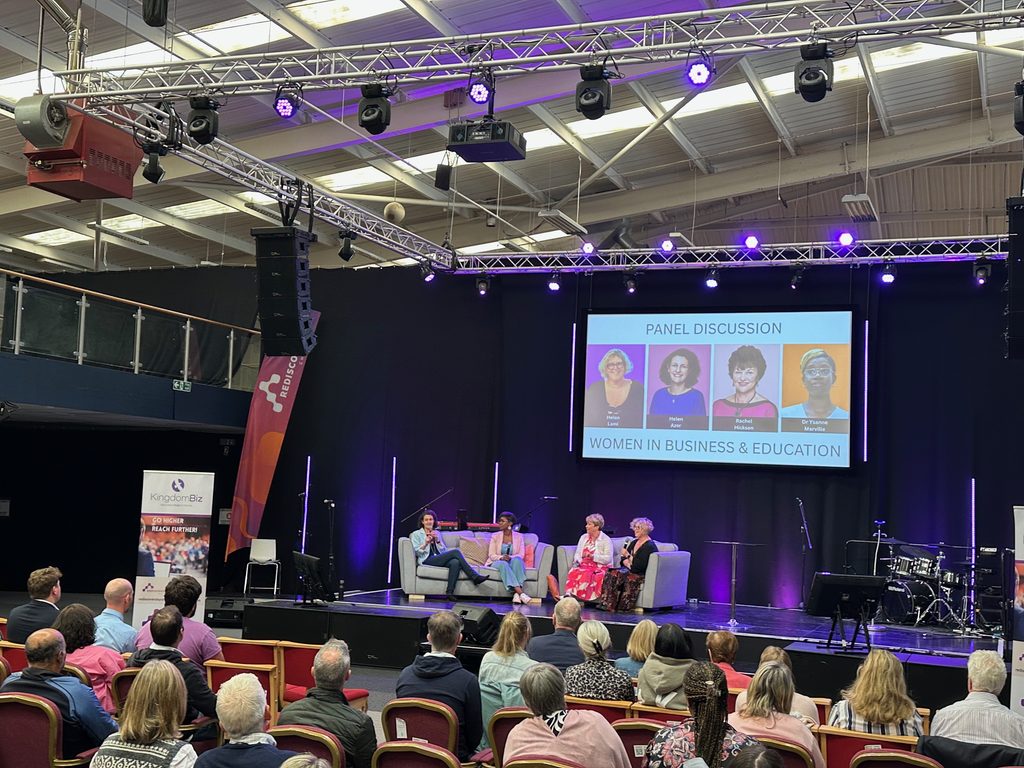
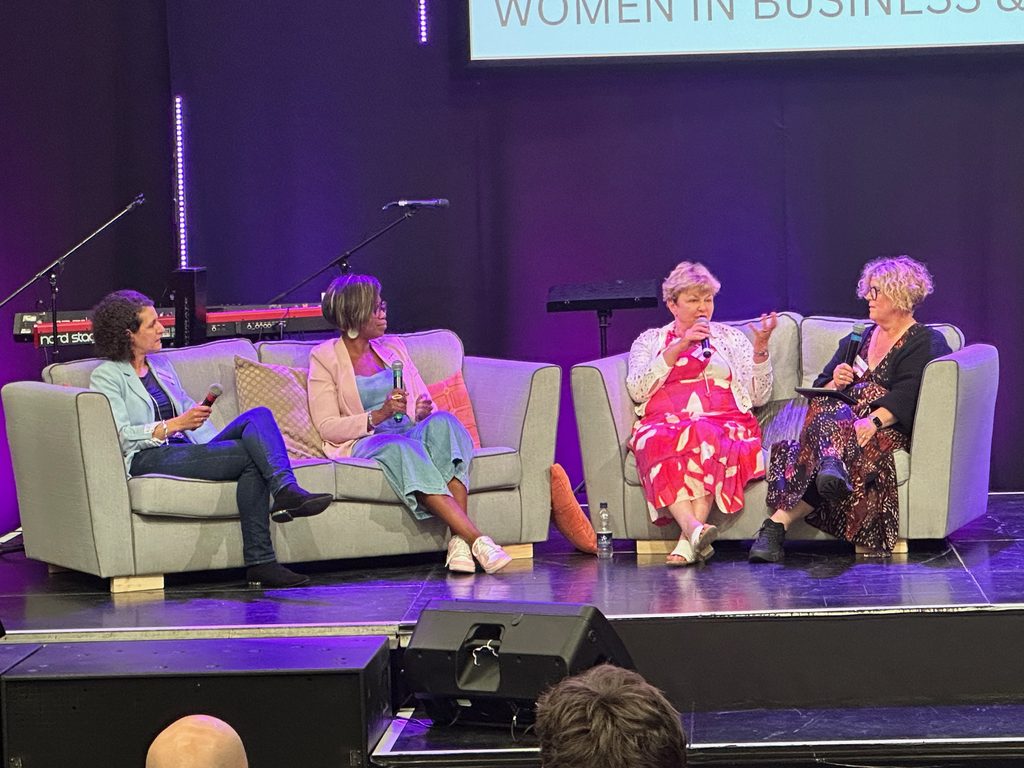
That question ran through one of the most open and enjoyable conversations at Rediscover Business & Leadership 2025, when Helen Lami was joined by Rachel Hickson, Helen Azer and Dr Ysanne Marville for a Women in Business panel. They came from very different working worlds, including business, psychology and Christian leadership, yet the conversation kept returning to a similar idea: leadership becomes stronger when people make room for one another.
There was plenty of laughter along the way. Rachel revealed that one of her specialist subjects might not be what anybody expected, Ysanne admitted her enthusiasm for counting down to Christmas and Helen Azer shared that some of her most entrepreneurial thinking apparently goes into practical jokes. Underneath the humour, though, was a thoughtful conversation about influence, calling and what good leadership can look like when people are secure enough to stop competing for space.
The panel did not shy away from the harder questions either. How do you respond when you are the only woman in the room? What happens when your voice is not being heard? How can workplaces make room for what people are carrying outside work, and what might change if experienced leaders deliberately helped the next generation find their place rather than expecting them to fight every battle all over again?
Helen Lami brought those questions together with stories from her own business journey and examples of women in the Bible who led with courage and wisdom. What followed was not really a conversation about women succeeding at the expense of men. Quite the opposite. Again and again, the panel returned to the value of men and women championing one another, people being recognised for their gifting and younger leaders being given room to grow.
Making room for women to lead
One of the strongest threads in the conversation was the difference between fighting to prove yourself and becoming confident enough to lead from who God has called you to be. For Dr Ysanne Marville, maturity has meant learning that she does not have to speak simply because she has something to prove. Earlier in her career, being young or being the only woman in a room could create pressure to establish that she deserved to be there. Over time, she has learnt to lean more on the Holy Spirit, choose when to speak and recognise when a quieter conversation may carry more influence.
That experience now shapes how she responds to younger women too. If somebody is being interrupted or overlooked, she can become the person she once wished had been there for her. Helen Azer brought another perspective, describing how her own experience has often been one of men actively championing her. She challenged the assumption that putting women around the table must automatically create a battle between men and women, preferring a picture where people recognise what God has placed in each other and make room accordingly.
Rachel Hickson spoke with the freedom of someone who has moved through very different seasons of leadership. Her advice was characteristically memorable: you do not have to fight every battle. Partnership matters, particularly in marriage and family life, and there are seasons when each person has to work out where to carry more and where to release responsibility. The result was a conversation less concerned with producing another formula for women in leadership and more interested in something deeper, people becoming secure enough to use what God has given them while helping others do the same.
Watch the Women in Business panel from Rediscover Business & Leadership 2025
Women in Business: full panel transcript
The transcript below retains the original spoken wording of the panel. Editing has been limited to punctuation, speaker identification and obvious transcription errors or commonly misheard words where the intended wording is clear from context.
Introducing Helen Lami
Al Whitmoor-Pryer: The next session is run by a wonderful lady in business, Helen Lami. We’ve grown to absolutely love Helen. She runs Academic Summer in different nations of the world, and this is a powerful woman of God. She’s one of the most powerful negotiators I’ve ever seen. When she negotiates in business, this woman really knows what she’s doing. But we love being with her. So can you welcome Helen to the panel and she will introduce what’s going to happen. Women in business. Here we go.
Two women, two businesses and two friends
Helen Lami: Bless you. Thank you. So I would just give a little intro, and then I’d like to invite some wonderful women to the stage. I want to tell you a story. First of all, it’s about two women, two businesses and two friends. And now we’re just about to start a chapter of those two businesses together.
Kate and I met 20 years ago. We met each other and got to know each other really well on a recruitment trip to Moldova. And we were both promoting different schools. We became friends. We cheered each other on. We stayed through difficult and good times and supported each other. Kate phoned me just before the summer and said, “I’m retiring and I’m closing my business because it’s so bad in the industry at the moment.” I said, “You can’t do that. It’s 30 years you’ve been in business.”
Well, the outcome of the story is those two businesses are coming together as sister companies, and I’m privileged to carry that baton on for good friends. And I hope that together, the two companies will be stronger together in a really difficult industry for us at the moment.
But you know, the topic today is Women in Business. But I want to start by talking about some women from the Bible. One is Esther. You know Esther. She was called for such a time in that time of history to make a difference to her people. She was bold and she was influential. Then Deborah. So Deborah was a prophet, a judge, a military leader, and she brought her wisdom and leadership.
And we’ve already heard about Lydia, who made such a difference in the early church, in business and was a dealer and generous. We keep hearing all these things again, don’t we? As a woman of God in business, we are resilient. We have vision. And of course, we’re good at multitasking. We also have natural intuition. We nurture. We have empathy, emotions. But don’t mention the hormones, especially to Al!
But yeah, I’m delighted to welcome some real women of impact to the stage now. And we’re going to get personal, real, and we want to inspire you. So can I welcome Helen, good name, Ysanne and Rachel back to the stage. We’ve got a lovely sofa.
Something you will not find on LinkedIn
Helen Lami: So I wonder if we could start. If you could introduce yourselves and tell us one interesting thing that we can’t read about you on LinkedIn. Helen.
Helen Azer: Helen. Rachel has already introduced Heartcry for Change. But I’ve had the privilege of working with Rachel for 18 years. I live in Oxford. If you’re looking at me thinking, where do you come from? I’m half Egyptian and half English, so I grew up in the Middle East. And one thing you wouldn’t find out about me. I did all of my education in German and in Arabic. And then one fun thing you wouldn’t find out about me. I am most entrepreneurial, I’m told, when I am cooking up practical jokes or pranks, which I then delegate to someone else at work.
Dr Ysanne Marville: Hi, I’m Ysanne and I have been in the UK now for 15 years after telling God I’d be here for one year. I’m from Barbados, born and raised, and I went into university doing pure maths and quickly decided it was not for me. People who know me know that I can often tell you how many days are left to Christmas. I am that person. I make no apologies. 103. I’m counting, absolutely.
Rachel Hickson: Hello. Firstly, because it’s not, it’s welcome. Rachel, you’ve already had a lot. Married to Gordon 44 years. What don’t you know about me? My specialist subject is male sex hormones. So there you go. So often, I was asked to do a conference on theology, and we were all asked to give our professional introductions. And everyone else was doing all their theologies and doctorates of divinity, etc. I’m a clinical scientist the whole way through. My specialist subject. It’s so funny. Four hundred and fifty guys simultaneously like crossing!
Helen Lami: You weren’t expecting that.
Rachel Hickson: You wanted a surprise.
What myth about women in business would you put to rest?
Helen Lami: Okay, I’m going to ask the next question to everyone as well. So what’s one myth about women in business that you’d like to put to rest? Should we start with Ysanne?
Dr Ysanne Marville: I think the myth is that women don’t work well together or that there’s conflict. And my experience of working with women, I’m really fortunate in that I’m on a senior leadership team of eight of us. There are seven women and there’s one man. We pray for him constantly. And what I have found is such a kind, compassionate, encouraging space. It’s such a safe space to be vulnerable, to share, “You’re not quite sure.”
And from it, we create such risky things because there’s this safety of these women who are encouraging, who are friends, who challenge in a really kind way. And so my experience of being in leadership has always been around really powerful, driven, kind women. And it has made me an excellent psychologist.
Helen Lami: Thank you. Helen.
Helen Azer: I think I love championing and seeing the partnership of male and female working together. And I think one of the myths is that, you know, you get women around the table and suddenly you’ve got the feminist agenda on the table constantly. And I think there is that over campaigning, which is sometimes really, really unhelpful. And that’s one of my bugbears.
But I think actually that we can’t work together with guys and actually want to put them down all the time. Actually, I think the cheerleading of male and female together, mothers and fathers together, sons and daughters together, is actually what we see more and more, especially the next generation. But I think it’s a myth that it’s not in the business place.
Helen Lami: Thank you. And Rachel, your myth?
Rachel Hickson: I joined the clinical research team at St Bartholomew’s as the youngest girl, 24, on a team of eight, which were mainly men. And I expected to be a little bit patronised. What I was amazed by is their cheerleading. They wanted my mind. And I think it’s in the science area that I worked, and I just found that if you are good and you love, I just love endocrinology. Steroid hormones, don’t get me on!
And I found Professor Chard, who is my mentor really, but my boss, he just championed me. And I would not be teaching today if it wasn’t for him because he saw me as a teacher and said, “Go into the medical school and do the endocrinology course. Teach.” So I’ve actually found my understanding was that they’d put me down, they’d minimise me.
Unfortunately church has done that, but I went to the business place and it was like all these guys saying, “Go for it, Rachel, you’re phenomenal.” And I was like, “What? Please, what was that?”
Helen Lami: We’ve got some agreement here.
Dr Ysanne Marville: We were having a mini conversation last night. I thought, could we say this? Because my experience in business in the world has been so encouraged by men that I’ve worked with and been championed. I’m not talking about Rediscover Church when I say the church. My experience of being a woman in the church has not always been that positive.
And that breaks my heart because the church should be the standard. We shouldn’t be looking to what the secular aspects are doing to think about how we treat women in business. Well, the church must be the standard. It must be God’s heart for what it looks like for men and women to work in business well together.
Helen Lami: That’s okay. And I’m really lucky. I’ve got a real rock of a husband that stands behind me and, you know, pushes me forward and that’s important.
A breakthrough moment
Helen Lami: So, Helen, what about a standout moment for you in seeing women in the workplace? Can you think of an example of a standout moment?
Helen Azer: I think one of the standout moments for me was, obviously my sphere is more the church ministry space. And I totally agree with what’s been said. It’s often the challenging place, actually. And I remember talking at a Norwegian national leadership conference, and Rachel and I had been invited to speak. And in Rachel’s wisdom, she also said, “Gordon, you must come with us because we need to represent male and female and this mothers and fathers.”
And so we went. But we’d been invited to do the plenary sessions. Well, we had no idea, but behind the scenes there was an absolute uproar because the senior elders of this network of leaders did not believe in women in leadership roles and they did not believe in women teaching. And so we had a big problem because the two main plenary sessions, which had been given to Rachel and myself, well, thank God we didn’t know any of this.
So what had happened is they had excused themselves from the conference and they’d gone and sat outside in the hallway. But what we didn’t know was they were listening to it all. The standout moment for me was at the end when they came and, tears pooling, falling down their cheeks, they apologised and they said, “We are so sorry that we have ever made it an issue that women should be in this place on the basis of what we have heard today and what we have seen represented. We have been amazed. And we can say God has called you to what you are doing.”
Now I say that not to pick us up, but because it was a breakthrough moment across that whole denomination. And since then it has never been an issue since. And what happened as a result of that is they’ve begun to train and equip their women leaders in the different spheres, both in the church place and in the business place.
And the standout for me was not that they were putting a place for me because I’m a woman, but thankfully because of the call of God, which we were both able to exemplify and model in such a way that actually it was the content and what we said, and that was Biblical and theological, and ticked the skill set box. So actually it was on merit that we were there, not the fact that we were women.
And for me, actually, if you want to be a woman in the marketplace and do something as a first, don’t do it because you’re flying the campaign for a woman. Do it because you’re qualified, you’ve done the hard work, and it’s on merit that you’re there, and God will then make room for you.
Helen Lami: Amen, sister.
How do you keep all the plates spinning?
Helen Lami: Rachel, I’ve got a question for you. Women are often known as multitaskers. You’re running the business, managing home, leading, serving in the church, sometimes all in one day. How do you keep all these plates spinning? And have you got any advice?
Rachel Hickson: Marry a good man. I mean, I remember going back. Gordon’s background, you’ll find out this afternoon. He’s Wellington College school, Sandhurst Academy, British military officer, then went Cambridge, trained Army, business.
So we got married. I began ironing his trousers. He took one look and he said, “What is that? I have railway tracks down the front.” From then on I have found a great man who loves ironing and does it all. So the ironing is always great in our house.
No, joking aside, how do you multitask? I think as we go through life and the different things, early marriage, we both were commuting into London. Long commute, Gordon running his business, me working in Barts. You just have to find how you partner together well. Then we had children. We were on the mission field. Gordon travelled a lot, so I had to learn to live alone and do a lot.
And I think in all those places, like I said, don’t get bitter, get better, you know, because I watch people just separate. Now, this is a season of life. There are seasons. Small kids, oh Lord. Teenagers alone, getting them married, oh no. Gordon just volunteered to go to London to help my daughter with her kids for five days. Seventeen days later he comes back. He’s a granddad extraordinaire.
So what I’m saying is, I don’t think any one person can do it. And I think in your marriage, if you are both going to be dynamic, front leading, carrying, I mean, I carry a whole organisation. Gordon was carrying St Aldates, Oxford, big church. You have to learn where you’re going to give and take, what’s going to release and work together.
Helen Lami: Thank you again. That’s fantastic. Thank you very much.
When your voice is not being heard
Helen Lami: And Ysanne, a question for you. How do you handle being the only woman in a room or when your voice isn’t being heard?
Dr Ysanne Marville: Better now. I think with maturity and leaning more on the Holy Spirit, my response is not out of my flesh anymore. Well, I think when I was, I was often the youngest person in a room, and I felt like I had to prove that I was meant to be in that room, or I had to show that I earned my space in this room and I was competent enough to be in this room.
And so there were often times where I wrongly did that by maybe talking more or challenging when I didn’t perhaps need to challenge as strongly as I did. And through God’s grace and wisdom, I prayed for wisdom, I think, and fasted and prayed for wisdom for maybe a year.
“God, that is what I need. You in these spaces with me. You’ve put me in these spaces. I’ve not put myself here, and I believe that You’ve put words in my mouth that need to be heard. And I don’t want to be this noisy person that people dismiss because I feel like I have a point to prove.”
And more and more, God is so faithful in telling me when to speak, how to speak, how to challenge. Because when I talk, I want people to hear. When we talk, we want people to hear. And if people are offended or they feel dismissed by what you say, they’re not going to receive it in the grace that you’re giving it to them.
So there are some times where there’s a private conversation with someone. If you felt like what you said wasn’t heard or acted on. I find that I am now that person for younger women in the room. If I perceive a woman isn’t being heard, I might say, “Oh, I think she’s not finished her point.” So I am trying to be what I wish somebody was for me in those spaces.
And I feel as though, because I’ve now been in those spaces for a long time, it’s lovely to see people asking my opinion. But I had to recognise the season that I was in. And while there was a place I thought God wanted me to be in terms of, you know, when we heard earlier today when David was told he was going to be a king, he didn’t become a king then.
There is a maturity in recognising the call that God has on your life, but it doesn’t mean this is the season for it, and to sit and be patient. So I hope I’ve answered your question.
Helen Lami: And that’s fantastic. Thank you.
What strengths do women bring to leadership?
Helen Lami: I’m just going to move on to another section about leadership and the future. And I’m going to ask both Rachel and Helen, actually. What strengths do women bring as leaders to business?
Helen Azer: I love and hate that question, if I may say that, simply because I think it depends. We’re so different, like the guys are so different as men. So what you bring isn’t always to do with your gender. But having said that, I think I love the fact you opened with Deborah today because I’ve been reflecting a lot on the story of Deborah in the Scriptures.
In fact, last weekend, where we were looking at what it means to mother well in this season, and actually in times of crisis in a nation, time and time again God picks up the mother characteristic in women and exemplifies it and actually models Himself on it. So when Jesus saw Jerusalem was in crisis and a mess and, you know, throwing out the prophets and not wanting to listen and turning away and disintegrating and fighting each other, what does He say?
“O Jerusalem, Jerusalem, I wanted to gather you as a hen, a mother hen.” And He lifts up that face of a mother. So I think there’s something in mothering, in womankind, that God has put alongside the fathering picture, which actually we do need to learn.
And I think it has to do with that ability to nurture, that ability to birth. Women are often birthers, and we need that in business, whether you’re male or female. But also I wonder whether it’s also to do with when we are in crisis as a nation, as we are, when society’s disintegrating. There’s that social concern that often women, and through history women reformers, have brought and have birthed a change, a transformation that is unique to that gift, that even Father God says, “I want to be a mum in this season.”
And I wonder whether there’s something of that. And it’s something I’m still chewing on, so I don’t have a definitive answer. But I think there is something encapsulated in that I love.
Just the final point. That word for mother that Deborah arises with is the Hebrew word, which actually combines two things, and it means strong water. And I love that picture of living water coming in, giving life. It’s the life giver, the mother heart, but also that strength that comes over Mama Bear standing up and saying, “You know what? This is what we’re going to do in this season.”
So there’s a strength in it. It’s not just the mother that’s the weak, nurturing, gentle kind, that sort of stereotype. And that strong water picture in the Hebrew is actually what, in Israelite times, they made glue from. So it’s the picture of the glue that brings things together and holds together that which otherwise would disintegrate. So, I don’t know, there’s a picture in there prophetically, which I’m still chewing on.
Helen Lami: I look forward to hearing how that progresses. Yeah, maybe. Would you like to?
Rachel Hickson: For me, I’ve been called sometimes the chocolate hand grenade. And I think there’s that gift on women sometimes. And I’ve seen it when I’ve been with a group of men. I can just basically say, “For goodness sake, stop it. Shut up. Sit down. Come to attention.” And if Gordon had done that, probably they’d all go…
But there is a grace on a woman in leadership that you can corral and even smack some bottoms. I mean, I live in Oxford. I’m with this Gen Z. So, you know, I do like Alpha thing and they’re always in your face. I love it. Come on, stick it out.
And, you know, one of these guys said to me, “Well then, what do you think about gay sex?” And everyone’s got that question. And I go, “I don’t.” And he goes, “Well, you must.” “I don’t.”
We have to answer the question. I said, “I don’t think about gay sex. I think about straight sex and have for 44 years.” And everyone else goes, “She did it.” But a girl can do that. And I think we need to actually let that mother heart that says, “For goodness sake, boys, just stop it.” And we can. I’m 65, so maybe I’ll get away with it.
Helen Lami: Did you want to add anything else then to that?
Dr Ysanne Marville: I absolutely agree with what Rachel said. There is something about, you can challenge people well with a relationship and through humour. I bring humour to my job all the time. It’s who I am. And you can suggest things that might come across a bit harsh with grace and with kindness and with humour.
And I think in addition to that, what you both have said, there is something about, in a time of crisis, women being able to hold that uncertainty and discomfort and not having an answer yet, but being sure an answer will arrive. And we don’t have the tools. We don’t know what the solution is right now, and that’s fine for right now. And we can hold a team, a family, people through uncertainty without having a definitive answer, I think.
Helen Lami: What we’re saying is we need the team, don’t we? We need the man and the woman working together and complementing each other.
Dr Ysanne Marville: Absolutely.
Creating workplaces where people can be honest
Helen Lami: Just going on to think of some of the challenges for women, and I mentioned that in my intro, like things like times of the month, hormones. How can we help people in the workplace? How can we help women in the workplace? Ysanne, would you like to?
Dr Ysanne Marville: Yeah. I think more and more we’re talking about, we’re having what used to be called uncomfortable conversations. And we are kind of removing the stigma around the experiences that women and everybody has in work. We’re talking more about mental ill health and how we can support your wellbeing.
So not when people are burning out or at crisis point, actually from the beginning, what supports good wellbeing and a good quality of life so that we’re not always kind of firefighting when things are not going as well. What I love about managing Gen Z, and people have a lot to say about them, they are very much about having a good work life balance, and it’s challenging companies to think creatively about: your life is not only about your work.
Your life is about your wellbeing, what you add to people, what you add to the community around you, how you give back. And so companies are having to think really carefully about, “I want people to want to work for me.”
If you treat people well, they will work so much more for you. They will stay with your company, they will produce well. And I think talking about challenges and having uncomfortable conversations is the only way to get to the other side of work is something that I want to do.
I am excited about Monday. I do not have that Sunday afternoon slump when I think about going to work, because I know they think of me and they see me as a whole person, not just about the outcome of what I can produce for them. And Gen Z are demanding that, and I’m here for it.
Helen Lami: Yeah. Okay. Rachel, would you like to add something? Is there a bit of a more mother thing?
Rachel Hickson: You know, I think if we look at the landscape of work, church, community, workplace, actually the needs of women, like perinatal care, postnatal care, birth of the woman, menopause, all these topics. We’re now even looking at giving time for miscarriage and, you know, compassionate care.
So many of the things that are now being for us as business people to put into our employment plan, a care plan. Maybe this is strange, but I would go, “Hey, don’t forget the guys.”
I’m working with men who are going through mental health, whose wife left them and they’ve been left with the children. You know, it isn’t just women who need actually the care. And so as a business person, I think don’t be so gender. Maybe with a Gen Z, look at them. Look at their mental health.
Look at those who, what does paternity care look like? Just working with a precious man in Oxford whose wife died of breast cancer. He was left with a five year old and 11 year old. How do we help them through?
So I think it’s a both and. And I think now that both men and women are in the working sector, then we need to put on both of them and provide those safe environments where men can feel that if they are vulnerable.
Because women have now begun to say, “Well, here it is, here’s my hormones, here’s…” Well, get on with it. And I think, well, come on girls, what about guys? Do they get a space where they can talk too and feel safe in the workplace and not lose their thing? So I think it is a whole new culture.
Dr Ysanne Marville: Not seeing it as a weakness. It’s a strength to say, “This is my experience. This is how I’m feeling. This is difficult for me as a man to manage the demands of now being the primary carer for a five and 11 year old and managing a sick household,” and knowing that there’s strength in vulnerability and saying, “I need help.”
Rachel Hickson: Yeah.
Helen Lami: So what we’re saying is those open conversations and giving space for people to say what they need and how we can support them.
Rachel Hickson: I think girls have got quite a good rapport over the last 20 years, but maybe women will hate me for that.
What excites you about the next generation?
Helen Lami: Helen, looking ahead, what excites you most about the next generation of women in business?
Helen Azer: I think the first thing is, what we’re all saying is that some of these issues are no longer the main issues, that actually we’ve come on leaps and bounds. I was, partly in preparation for this, partly because it’s a subject I’m interested in, but on Tuesday there was a webinar with Deborah Meaden from Dragon’s Den fame.
And she was on a webinar organised by something called Female Invest. And it was all about encouraging women to be as good at investment as the guys are. Apparently there’s a massive gap of, like, billions in investment. And 78,000 women had signed up for that webinar and 11,500 were on live that night.
And I just thought that is phenomenal. But what excited me about that was that there is still a gap between male and female, but actually the women aren’t waiting around thinking, “Can I? Can’t I? Do I have permission?” It’s like, “Here’s an opportunity that’s been created for me. Here’s an open door. Let me walk through it.” And they’re walking through by their hundreds of thousands.
And so I think there isn’t so much, in my experience anyway, that reticence anymore. But actually there’s that in Gen Z and younger. Actually, I think it’s in our kids from school age and Alphas, exactly. And they are like, “Oh, of course I can do it.” And there’s a confidence there.
And so the onus on those who are older is not to say, “Well, I couldn’t do it at my age. You know, wait your place, wait your time, wait till you’re 40,” or whatever it is. But actually to make a way for them, to let them stand on our shoulders, to cheerlead them as much as we can.
But then also to recognise that some of the battles that we have fought are now done. And we can move on from there. And there are new days of opportunity, so not to put on them what we had to struggle with and almost pass on the slight resentments.
And also I think the feminist campaigning, I mean, I said it at the beginning, but it is such a bugbear for me. I just think sometimes there’s the over campaigning, which then either puts guys down completely, which I think is a disaster, or it just labels us. And it’s like, actually, just run with it. Run with what God’s called you to do.
Helen Lami: So prove ourselves.
Helen Azer: Absolutely. And I think the next generation is doing that and that excites me.
From sage on the stage to guide by the side
Helen Lami: That’s good. It’s good. And I think the next generation, I can see what I’m noticing as well, is they need mentors. Not that big boss who sits in the office and just delegates. They want someone who walks alongside them. And I think it is changing.
Dr Ysanne Marville: It’s moving from what I call that sage on the stage to the guide by the side. It’s not this person that’s telling you what to do. Actually, “I’m going to join in your life. I’m going to take an interest with you and together kind of guide you through something.” “I wish someone did that for me, and actually, I’m now going to be active in supporting you through this.”
Rachel Hickson: It really goes to what I said of what model have you got of training, of how you’re going to put apprenticeships, you know, face to face with the incredible gift, what we have of impartation through Zooms, podcasts, etc. If we don’t do it together, we’re going to lose the Gen Z. They want to be on your… “Can I be with you?”
Helen Azer: And with that, and both of you saying that mentoring, I think the other thing Rachel, you mentioned, you know, the fathers and sons, apprenticeships. And I want to say, let’s think fathers and mothers and fathers and daughters too, and, you know, mothers and sons, not just along the gender stereotype again.
And I think, you know, the Middle East is a case in point. At the moment, a lot of the women entrepreneurs and women in business, some great friends of ours, have inherited their father’s businesses because actually they’re the only inheritors in the family. There aren’t sons.
And I’m not making the point to say exclude the sons, but I’m just saying that actually there is something new happening. And the Middle East being a place where you wouldn’t think women would cheerlead, actually God is setting a whole new model, and He’s always saying, “Let’s delete what has been and let’s break the moulds and shape something new.”
And we’ve got to think outside of our boxes and say, “I’ll be a father to daughters as well as to sons,” if that makes sense, in the business place.
Dr Ysanne Marville: Absolutely. And I think, I’m 40 years old, my dad 72. At a time where he would speak into me and say, “This is what you’re going to be,” and I had uncles who were just really surprised that he would take the time to speak into me.
He’s one of my biggest, if not the biggest, cheerleader. We went to often talk about business and saving and investment from, I can barely remember when. And so having that father figure speaking into my life from an early age, absolutely, I was able to stand on his shoulders, and he created a path for me that I don’t know that I would have found without that.
Helen Lami: Yeah. No, I think that with my husband, often the Albanian culture is man is a really powerful man. And I always feel really privileged to have him there. I’m feeling very proud because you can feel it and, you know, and he’s cooking lunch, by the way.
What would you tell your younger self?
Helen Lami: So moving on. If you could give your younger self a bit of advice, what advice would you give yourself?
Rachel Hickson: Me? I think, “Shut up, Rachel.” [Unclear phrase.] So I think because the leader in me always wanted to do it, it’s a little bit what you said. As I got older, I thought, “It’s okay, Rachel. Let it go. You don’t have to fight every battle to win.” And I think I must have been a monster. So that’s why I think Professor Chard was a saint.
Dr Ysanne Marville: Similar, like, just be cool. Be patient. You do not have to enter every fight you are welcomed into. You can leave things alone. It’s not your battle. You do not have to fight every single battle that you think is there. God fights for you. God goes before you. Just be cool. Just be patient.
Helen Azer: And I think it’s just the grace of God. We end up where we do. Sometimes we think, “Oh, we’ve planned this and we’ve strategised and we’ve developed the career path and the plan and the business plan,” all the rest of it. And then God surprises us anyway and you end up where you didn’t expect to be.
And it’s like, I think actually it’s almost like I want to speak to my future self rather than my younger self and say, “You’re here because of the incredible faithfulness of God and what He’s done, and the One who’s helped you overcome even the obstacles, the lion and the bear as it were. If there’s a Goliath in the future, He can still do it.”
So it’s almost like I actually want to give a pep talk to my future self because I think actually, in overthinking it, I’m a bit more cautious about the future. And when I look back, I think, “Oh, Helen, you did X, Y and Z,” or whatever. And I don’t want to lose that edge that can still pioneer.
What does impact mean to you?
Helen Lami: And in one sentence, because the conference has been about impact, what does impact mean to you in business or in what you do?
Dr Ysanne Marville: I can’t do it in a sentence. I’ve tried. I’ve tried. I think it’s… I can give you two. Thank you. Can I say something and then I’ll give you the sentence? Is that cheating?
Helen Lami: Okay. Got one minute.
Dr Ysanne Marville: Okay, I got one minute. So in education, in psychology, we’ve kind of taken on a business model. And so we have outcomes and targets, and we have outcomes and targets that can be easily measured. And so it feels as though everything is funnelled into what is easily measured. How many children are making points of progress? How many children have been excluded?
And so it’s these really short outcomes, which I understand, but then everything is driven towards those outcomes. And I think, what about whether children are happy or they have a sense of belonging, or they feel like they know what the future is going to bring?
So I guess impact for me in my sphere of influence is: do the children and young people feel seen and heard? Do they feel like they know what the future holds and that they’re going to make a difference? And are they happy with the path that their life is on? And that’s less easy to measure.
Helen Lami: But certainly more than one sentence, I know.
Helen Azer: Impact is when I invest in and trade with the gifts that God has given me to become the greatest I can be. That brings the biggest impact in the sphere God wants me to be in.
Helen Lami: All right, Rachel, can you manage one sentence?
Rachel Hickson: No, I have to stand back. Impact for me is having a whole plethora of people saying, “I want to go away. You go.” And I want to communicate vision clearly, so that whole generation, all running for Jesus. And they have to stomp my feet. That’s why I had to stand back.
Called, chosen and empowered
Helen Lami: Well, I’d like to thank Rachel and Ysanne and Helen. And I’m just going to sum up. What we’re saying is we’re called, we’re chosen, we’re empowered to build, lead, nurture and transform cultures for God’s glory. And we should never feel we can’t do it. But we should step out into what God wants and called us to do.
We’re made in God’s image. We’re all equal in Christ, and we’re empowered by the Holy Spirit. I think that was one from Mark this morning, wasn’t it, as well?
And Proverbs 31, verses 10 to 31, paints a picture of a wise, strong and godly woman who lives with purpose and compassion. She is a skilled businesswoman, a provider for her household and someone who fears the Lord.
She manages her time, resources and relationships with excellence, speaks with wisdom and kindness and is praised by her family and community. This passage is not about perfection, but about a woman who lives out her calling with strength, grace and faith.
Join us at Rediscover Business & Leadership 2026
One of the things this conversation captured so well was that business and leadership are never only about what you can achieve on your own. They are also about who you make room for and what you are willing to pass on. There is a generosity in that kind of leadership, one that notices potential in other people and is secure enough to help it grow.
That continues to sit at the heart of Rediscover Business & Leadership. The conference brings Christians from across business and working life together to learn from people with real experience, meet others who understand the pressures of the marketplace and think seriously about how faith shapes the way we lead.
Rediscover Business & Leadership 2026 takes place on Friday 13 and Saturday 14 November at the Mercure Exeter Southgate Hotel, with Rachel Hickson among the speakers returning for the 2026 programme. The weekend begins on Friday evening before moving into the main conference programme on Saturday, leaving room for the sort of conversations and connections that often become as valuable as the sessions themselves.
Book your place for Rediscover Business & Leadership 2026 now.

Kingdom Biz is a growing community for Christians in business, leadership and the workplace who want to grow in faith and in what they do. Based in Exeter and connecting people across Devon and beyond, we bring together entrepreneurs, leaders and people at every stage of their working life to learn from experienced mentors, encourage one another and explore what it means to put Jesus at the heart of our everyday work. Through our weekly online mentorship hub, via Teams, and our Rediscover Business & Leadership conference, Kingdom Biz is helping build a community where faith and business belong together. Your work matters to God. Let’s discover what He can do through it.